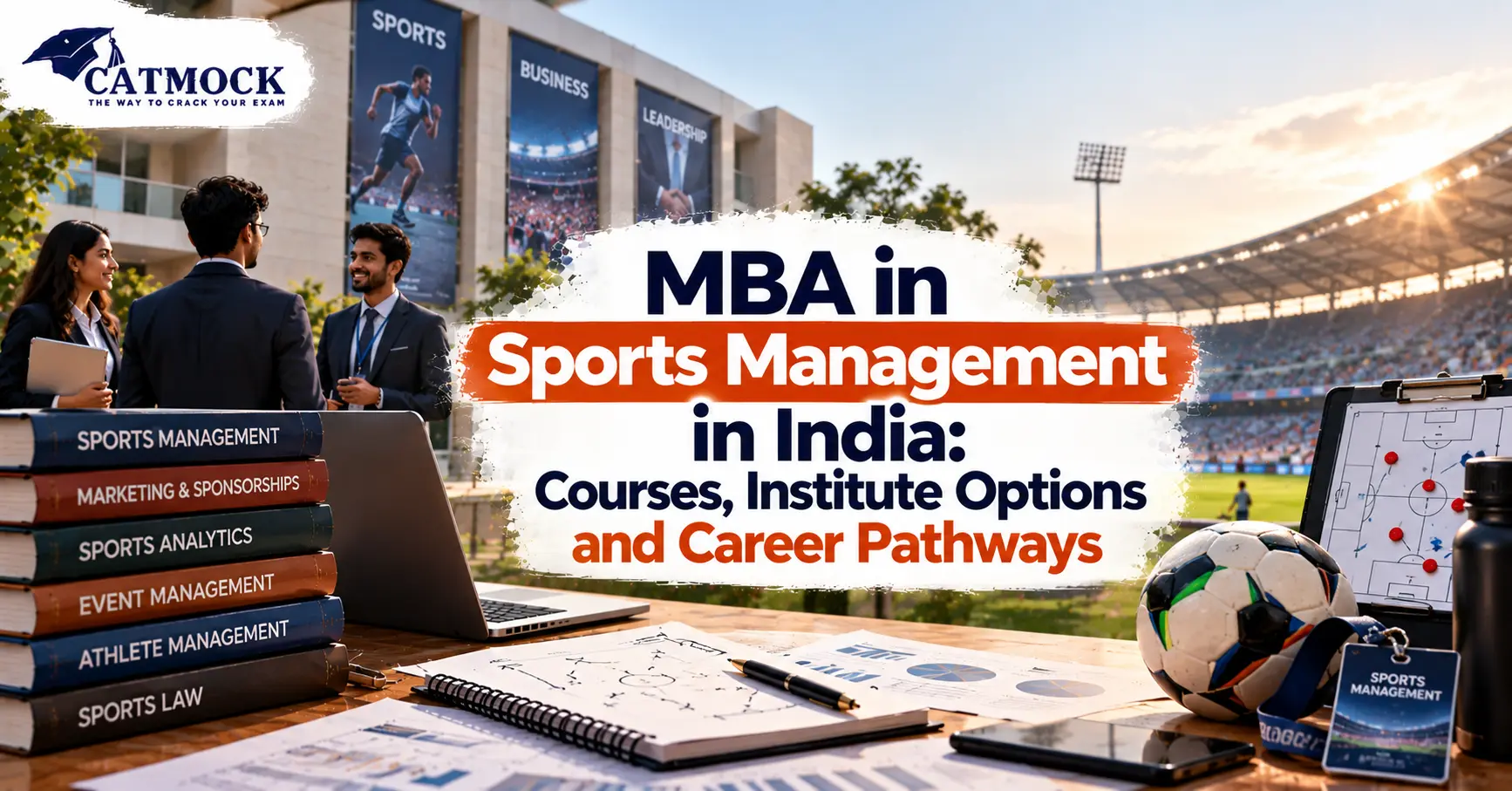
India watches cricket, follows football leagues, cheers at kabaddi and wrestling arenas, and streams sport on phones every day. Behind every tournament, franchise, sponsorship deal and broadcast sits a team of trained managers. An MBA in Sports Management in India is one route into that team.
This guide explains what the programme is, who can apply, which exams to prepare for, how institute options compare, what the syllabus covers, and which career pathways open up afterwards. It stays practical, so you can decide whether turning your passion for sport into a profession is the right move.
What Is an MBA in Sports Management?
An MBA in Sports Management is a two-year postgraduate degree that applies core business management to the sports industry. Alongside subjects such as marketing, finance and operations, you study sports law, sponsorship, event management, facility planning, athlete representation and sports analytics.
You might also see it called MBA (SM), MBA in Sports Business, or an MBA in Sports Management and Business. The labels differ, but the goal is the same: to produce managers who understand both business and the unique economics of sport.
Sports is unlike most industries. Revenue comes from broadcasting rights, ticketing, sponsorships, merchandise, licensing and player transfers. Demand is driven by emotion and loyalty, and seasons are short and event-driven. A specialised MBA prepares you for these conditions in a way a general MBA often does not.
MBA in Sports Management: Course Highlights
| Parameter | Details |
|---|---|
| Course name | MBA in Sports Management / MBA (SM) |
| Level | Postgraduate |
| Duration | 2 years (semester or trimester pattern) |
| Mode | Mostly full-time; a few executive and online options exist |
| Eligibility | Bachelor’s degree, usually with 50% marks |
| Admission | Entrance score (CAT, XAT, CMAT, NMAT, GMAT or institute test) + GD/PI |
| Typical total fees | Roughly ₹2 lakh to ₹13+ lakh depending on the institute |
| Core focus | Sports marketing, events, law, finance, analytics, operations |
| Typical roles | Sports marketer, event manager, athlete manager, analyst, facility manager |
Details change each admission cycle. Always confirm on the official website of the institute.
Why Is Sports Management Growing in India?
Several forces are pushing this industry forward.
- Franchise leagues: the IPL changed how Indian sport is packaged and sold, and leagues in football, kabaddi, badminton, hockey and volleyball followed.
- Digital viewing: OTT platforms and mobile streaming have widened the audience and the advertising pool.
- Government support: initiatives such as Khelo India and the work of the Sports Authority of India have improved grassroots infrastructure and visibility.
- Esports and fantasy gaming: new categories of fans and sponsors have emerged.
- Brand investment: companies increasingly use sport to reach consumers, which creates demand for sponsorship and marketing talent.
All of this means more roles for people who can plan, sell and manage sport professionally. [Add internal link: Careers in Sports Industry]
Who Should Consider an MBA in Sports Management?
This degree suits you if you:
- follow sport closely and understand its business side,
- want to work off the field in marketing, operations or strategy,
- are comfortable with numbers, negotiation and communication,
- can handle irregular hours, travel and event pressure.
Former athletes also benefit, since many institutes give weight to sports background during selection. You don’t need to be a professional player, though. Management skills, networking and a clear career goal count for a lot.
Eligibility Criteria for MBA in Sports Management
Rules vary by institute, but the usual requirements are:
- A bachelor’s degree (three years or more) from a recognised university in any discipline.
- A minimum of about 50% aggregate marks (some relaxation for reserved categories).
- A valid score in an accepted management entrance exam, where required.
- For some institutes, extra weight on sports achievement or participation.
Final-year undergraduates can usually apply provisionally. Read the institute’s brochure carefully, since weightage for academics, test score, interview and sports background differs.
Entrance Exams and Admission Process
| Exam | Conducted by | Used for |
|---|---|---|
| CAT | IIMs | Accepted by many top business schools |
| XAT | XLRI | Accepted by several private B-schools |
| CMAT | NTA | Accepted by many AICTE-approved institutes |
| NMAT / GMAT | GMAC | Accepted by selected private universities |
| Institute-level test | Individual institute | University-specific selection |
Step-by-Step Admission Process
- Shortlist institutes based on fees, location, curriculum and placement record.
- Take an entrance exam that your target institutes accept.
- Apply online and submit your scorecard, documents and sports achievements.
- Prepare for GD and PI: expect questions on sports business, current events and your motivation.
- Accept the offer and complete fee payment and documentation.
Start preparing at least six to eight months in advance. Read sports-business news every day, so your interview answers sound informed and original.
You can check approvals and recognition on the official AICTE portal and the UGC website.
MBA in Sports Management Institute Options in India
A handful of institutes run dedicated MBA programmes in this field. The table below groups the options by type, so you can compare them fairly. It is a starting point, not a ranking.
| Institute / Option | City | Programme | Approx. total fees | Selection basis |
|---|---|---|---|---|
| K J Somaiya Institute of Management | Mumbai | MBA in Sports Management (2 years) | About ₹13 lakh | CAT / XAT / GMAT / NMAT / CMAT + GD/PI with sports background weightage |
| Symbiosis School of Sports Sciences | Pune | MBA (Sports Management), full-time residential | About ₹9–12 lakh | Institute selection process |
| Private universities with sports management MBA | Various | MBA in Sports Management | About ₹2–12 lakh | Entrance scores + interview |
| Sports universities | Various | Sports management and related PG programmes | Varies | University admission process |
| Executive and diploma programmes | Various | PGD / executive courses | Lower | Graduate + work experience |
Fee figures come from public listings and change each year. Check the latest numbers with the institute before applying.
How to Choose the Right Institute
- Approval: confirm UGC/AICTE recognition and the validity of the degree.
- Industry links: look for partnerships with leagues, federations, broadcasters and agencies.
- Facilities: on-campus sports infrastructure helps with practical learning.
- Internships: ask how many students secure sports-industry internships.
- Placement outcomes: request the recent placement report, including roles and employers, not only the highest package.
- Return on investment: compare total fees against realistic starting salaries.
You can also compare institutes on the NIRF ranking portal.
MBA in Sports Management Syllabus and Subjects
The first year builds general management skills, and the second year moves into sports-specific subjects.
Year 1: Core Management Foundation
- Marketing Management
- Financial Accounting and Management
- Organisational Behaviour
- Business Statistics and Analytics
- Operations Management
- Business Law and Ethics
Year 2: Sports-Specific and Elective Subjects
- Sports Marketing and Sponsorship
- Sports Law and Risk Management
- Event Management and Operations
- Sports Facility Planning and Management
- Athlete and Talent Management
- Sports Analytics and Technology
- International Sports Management
- Media Rights and Broadcasting
Most programmes include a summer internship, live projects and industry workshops. A good internship is often the first step to a job offer, so choose yours with care.
Skills You Will Build
| Skill category | Examples |
|---|---|
| Business | Marketing, budgeting, negotiation, revenue strategy |
| Sports-specific | Contract basics, sponsorship sales, event planning, rights management |
| Analytical | Fan data analysis, performance and market analytics |
| Interpersonal | Networking, communication, leadership, crisis handling |
Career Pathways After an MBA in Sports Management
The strongest feature of this degree is the variety of career pathways it opens. Roles fall into several clusters.
Main Career Clusters
- Sports marketing and sponsorship: build brand partnerships with teams, leagues and events.
- Event and venue management: plan tournaments, match-day operations and stadium logistics.
- Athlete and talent management: represent players, manage contracts and handle endorsements.
- Sports media and broadcasting: work with broadcasters, digital platforms and content teams.
- Sports analytics and technology: use data to guide performance, scouting and fan engagement.
- Sports tourism and fitness business: manage fitness chains, academies, resorts and sports travel.
- Esports and gaming: manage teams, tournaments and sponsorships in a young segment.
- Government and federations: support policy, programmes and administration in sporting bodies.
Who Hires Graduates
Franchise teams, leagues, sports marketing agencies, broadcasters and OTT platforms, brands with sports sponsorships, fitness companies, event companies, sports academies and sports federations.
Salary Expectations
Pay depends on the institute, your internships, the employer and your own skills. These are broad indicative ranges, not promises.
| Role | Experience | Indicative salary (per annum) |
|---|---|---|
| Sports marketing / sponsorship executive | Fresher | ₹3 – ₹8 lakh |
| Event / operations manager | Fresher to 3 years | ₹3 – ₹7 lakh |
| Sports analyst | Fresher | ₹4 – ₹9 lakh |
| Athlete / brand manager | 3–6 years | ₹6 – ₹15 lakh |
| Senior sports business manager | 8+ years | ₹15 lakh and above |
Entry-level pay in sports can be modest compared with finance or consulting, especially at smaller organisations. Strong internships, networking and a data or digital skill set improve your position.
MBA in Sports Management vs Other Routes
| Factor | MBA in Sports Management | General MBA (Marketing) | Sports Management Diploma / PGD |
|---|---|---|---|
| Duration | 2 years | 2 years | 6 months – 1 year |
| Industry focus | High | Low to medium | High |
| Career flexibility | Medium (sports and brand roles) | High (all industries) | Medium |
| Cost | Medium to high | Medium to high | Lower |
| Best for | Committed sports-business careers | Flexible management careers | Quick entry or upskilling |
If you are certain about working in sport, the specialised MBA is a direct path. If you want to keep options open, a general MBA with a sports-related internship may work equally well.
Challenges to Know Before You Apply
- Limited seats and institutes: fewer options than a general MBA.
- Competitive job market: many people want sports careers, so networking matters.
- Starting salaries: often lower than corporate finance roles, though growth can be strong.
- Seasonal pressure: match days, tournaments and travel mean irregular hours.
Knowing these upfront helps you plan your finances and expectations.
Practical Tips to Build a Strong Profile
- Volunteer at local tournaments, school events or club activities.
- Follow sports-business news and analyse deals and sponsorships.
- Learn basic data tools such as Excel, Power BI or Python.
- Build a professional network on LinkedIn with industry people.
- Take an internship or live project before or during the programme.
- Prepare a clear story: why sport, why management, why now.
Summary
- An MBA in Sports Management is a two-year postgraduate programme that applies business skills to the sports industry.
- Eligibility is generally a bachelor’s degree with about 50% marks, plus an entrance score and a GD/PI round.
- Fees vary widely, from roughly ₹2 lakh to more than ₹13 lakh in total.
- Careers cover sports marketing, events, athlete management, analytics, media, esports and sports tourism.
- Salaries depend on institute, internships, employer and skills, so verify recent placement data.
- Networking and practical experience matter as much as the degree.
Frequently Asked Questions (FAQs)
1. What is an MBA in Sports Management?
It is a two-year postgraduate degree that combines core management subjects with sports marketing, law, events, finance and analytics.
2. Who is eligible for an MBA in Sports Management in India?
Graduates from a recognised university with about 50% marks can apply. Most institutes also ask for a management entrance score.
3. Which entrance exams are accepted?
Commonly accepted exams include CAT, XAT, CMAT, NMAT and GMAT. Some institutes run their own selection process.
4. Do I need a sports background to apply?
Not always, but some institutes give extra weight to sports participation. Passion, knowledge of the industry and strong management skills also help.
5. How much does an MBA in Sports Management cost?
Total fees range from about ₹2 lakh to over ₹13 lakh depending on the institute. Check the latest fee structure before applying.
6. What jobs can I get after this MBA?
You can work in sports marketing, event management, athlete management, sports analytics, media, esports, fitness business and sports administration.
7. What is the salary after an MBA in Sports Management?
Freshers commonly earn between ₹3 and ₹9 lakh per year, depending on the role, employer and skills. Senior roles pay more.
8. Is an MBA in Sports Management worth it?
It is worth it if you are committed to the sports business and can invest in networking and internships. Compare fees with realistic salary outcomes first.
9. Can I study sports management online?
Some online and executive programmes exist, but check recognition and industry exposure carefully before enrolling.
10. What is the difference between an MBA in Sports Management and a general MBA?
The specialised MBA focuses on sports industry subjects and contacts, while a general MBA offers broader career flexibility across industries.
Conclusion
An MBA in Sports Management in India can turn a love of sport into a real business career. The programme blends management training with sports marketing, events, law and analytics, and graduates can pursue many career pathways across leagues, brands, agencies and media.
Success depends on picking the right institute, preparing for the entrance exam and interviews, building real-world experience, and being realistic about starting salaries. Shortlist institutes, verify current fees and placement reports on their official sites, and begin building your sports-industry network today.
You May Also Like : CAT MOCK, CAT MOCK PYQ
Follow Us On : Facebook, Instagram, Youtube