Operations management rarely gets the spotlight that marketing or finance does. Still, it’s the function that keeps a business actually running. Turning raw materials into products, manages supply chains, and makes sure processes don’t fall apart under pressure. If you’re an MBA aspirant, a working professional, or someone exploring a career. Shift into operations; building this skill set doesn’t require an expensive certification program.
Several platforms now offer free or low-cost operations management courses that cover everything from foundational theory to supply chain fundamentals. In this guide, we’ve put together 10 online operations management courses worth exploring, along with what each one covers.
And who it’s best suited for!
Quick Comparison Table
| S.NO. | Course Name | Platform | Best For |
| 1 | Operations Management | Coursera | A structured, university-style introduction |
| 2 | Operation Management | Great Learning | Beginners wanting a free foundational overview |
| 3 | Introduction to Operations Management | Skillvelo | A quick, accessible starting point |
| 4 | Operations Management | Cursa | Self-paced learners who prefer a flexible format |
| 5 | Introduction to Operations Management | OpenLearn (Open University) | Learners who want academically rigorous, university-backed content |
| 6 | Understanding Operations Management | OpenLearn (Open University) | Those who want a deeper look at leadership within operations |
| 7 | Fundamentals of Operations Management | Alison | A structured, certificate-based foundational course |
| 8 | Diploma in Operations Management | Alison | Learners wanting a more complete, diploma-level certification |
| 9 | Supply Chain Management Basics | Alison | Anyone focused specifically on supply chain and logistics |
| 10 | Operations Management Essentials | Great Learning | Learners ready for a more advanced, premium-level course |
1. Operations Management (Coursera)
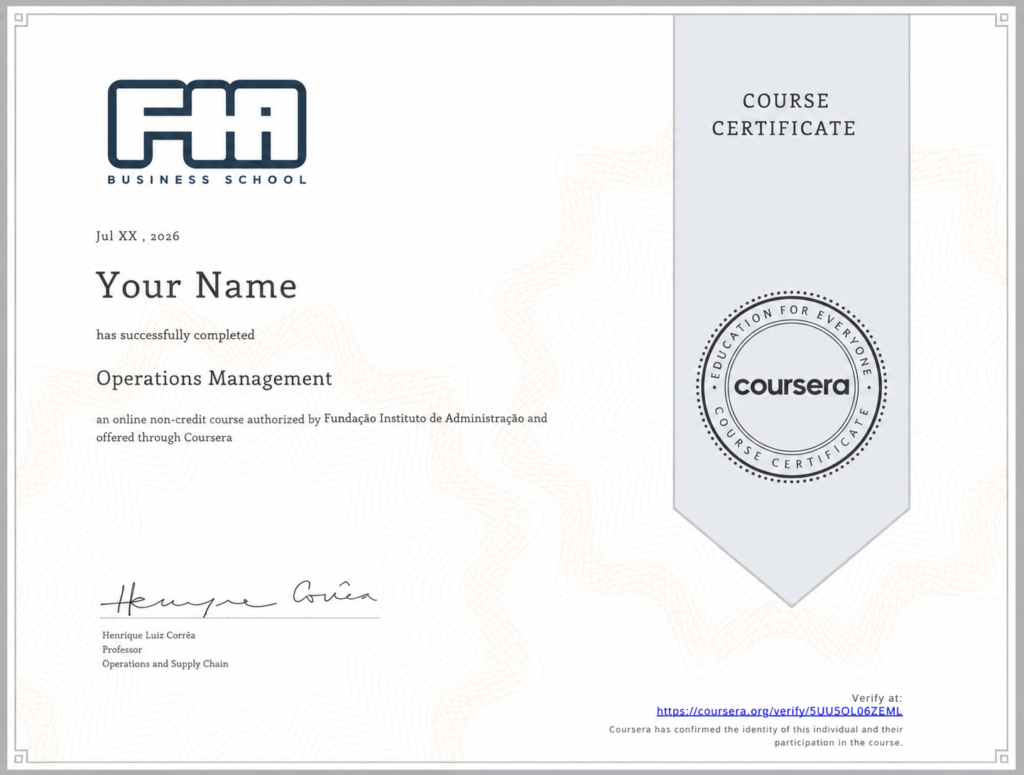
This course offers a structured, academically grounded introduction to how operations management functions within a business. It covers core concepts like process design, capacity planning, and quality management. It gives you a framework you can apply across industries rather than a narrow, single-context view. Because it’s hosted on Coursera, it follows a familiar format of video lectures, readings, and short assessments, which makes it easy to track your own progress.
What stands out about this course is how it ties operational decisions back to broader business outcomes — cost, efficiency, and customer satisfaction — rather than treating operations as a purely technical function. That framing is useful if you’re planning to use this course as prep for MBA coursework or case-based interviews, since it trains you to connect operational choices to business impact.
Link: Operations Management
2. Operation Management (Great Learning)
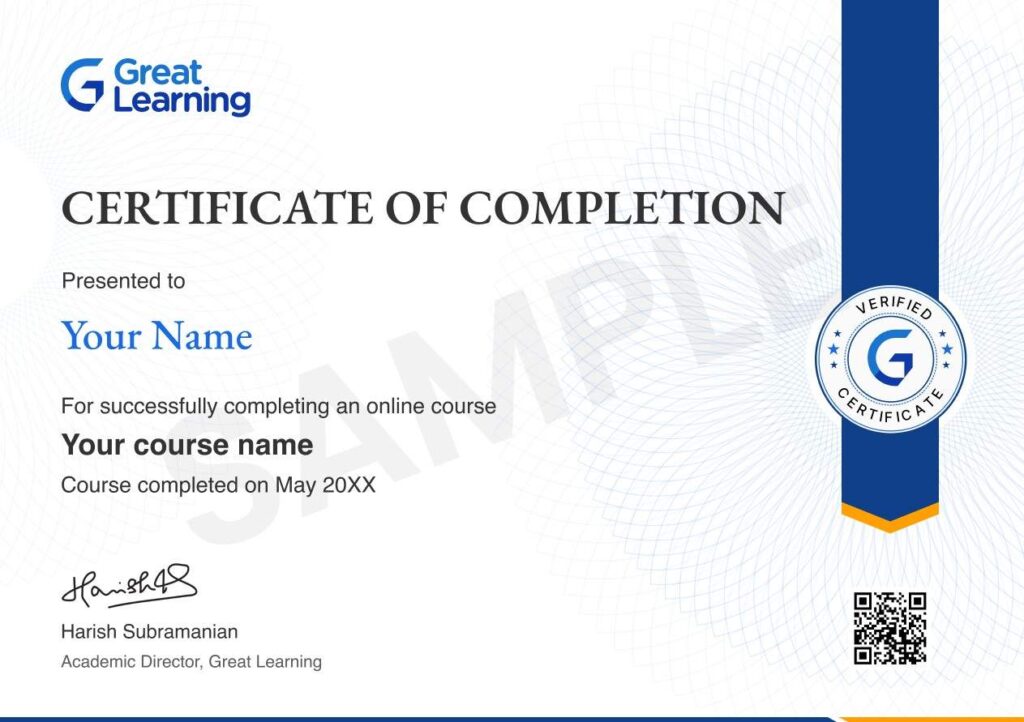
A free, beginner-oriented course that walks through the fundamentals of how businesses plan, produce, and deliver goods and services efficiently. It’s a good option if you want a no-cost introduction before deciding whether to invest more time in a longer program. The course keeps explanations simple and avoids overly technical language, which makes it accessible even if you’re coming in with zero background in the subject.
Since it’s positioned as an entry-level course, it works well as a first exposure to core operations vocabulary—throughput, capacity, process flow—that you’ll encounter again in more advanced courses later in this list.
Link: Operation Management
3. Introduction to Operations Management (Skillvelo)
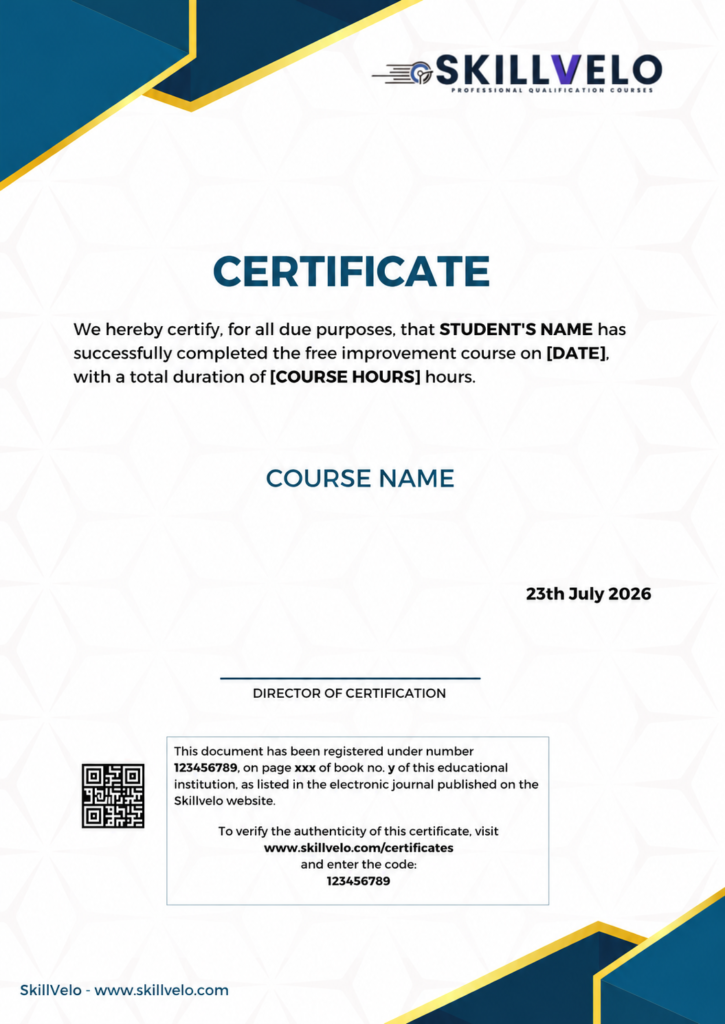
This course provides a compact, easy-to-follow introduction to operations management basics, making it a solid option if you want to get oriented quickly without committing to a lengthy program. It’s structured to move at a faster pace than some of the university-style courses on this list, which suits learners who prefer to get a working understanding fast and dig deeper later if needed.
Because it’s shorter in scope, it’s best treated as a starting point rather than a comprehensive program — a way to build initial familiarity with the subject before moving on to something more detailed like the Alison diploma or the Coursera course.
Link: Introduction to Operations Management
4. Operations Management (Cursa)
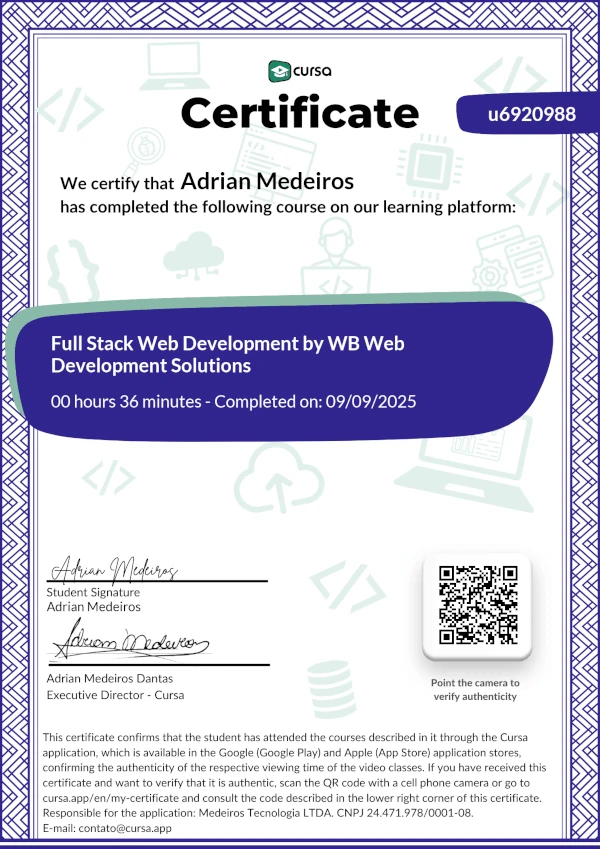
Cursa’s operations management course is designed to be flexible and fully self-paced, which makes it a convenient option if your schedule doesn’t allow for fixed deadlines. It covers foundational operations concepts and is structured so you can move through the material in whatever order and pace suits you best.
This flexibility makes it a reasonable pick for CAT or MBA aspirants juggling exam preparation alongside other commitments, since you can fit short study sessions in around your primary schedule without losing continuity.
Link: Operations Management
5. Introduction to Operations Management (OpenLearn)
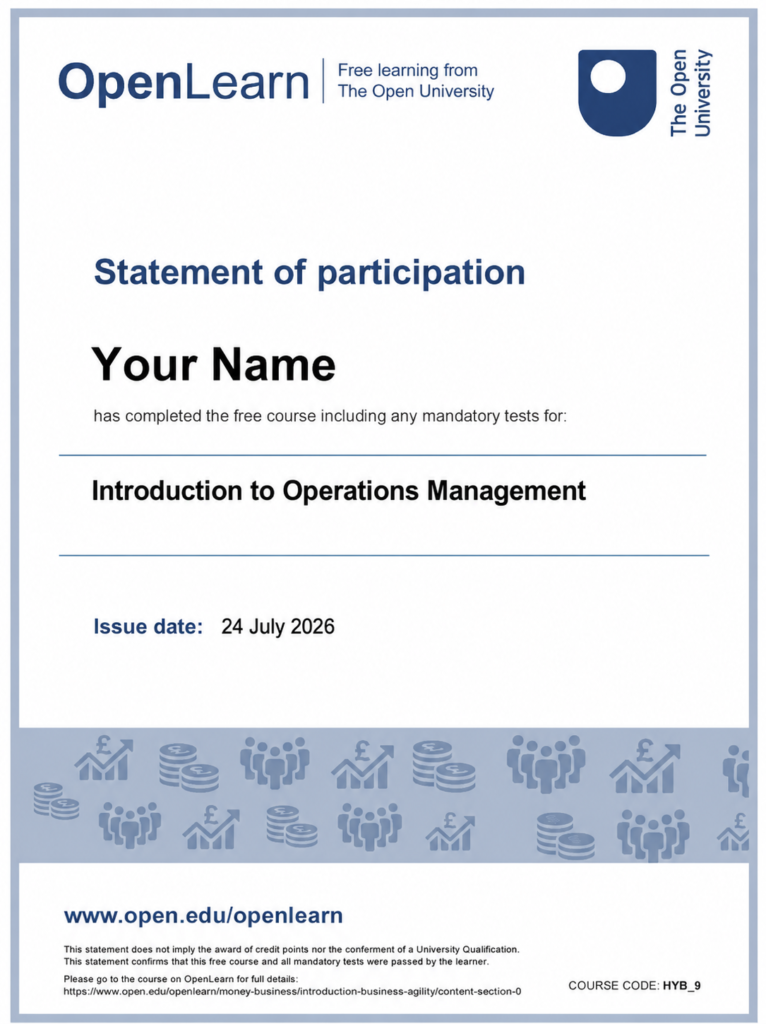
Offered through Open University’s OpenLearn platform, this course brings a more academically rigorous approach to the subject, situating operations management within the broader context of business strategy. It’s a good fit if you want content that’s been designed with the same care as a university module, without the cost or time commitment of a full degree program.
The course connects operational decision-making to strategic business choices, which is a useful lens if you’re preparing for MBA coursework where operations and strategy are often taught as interconnected subjects rather than isolated topics.
Link: Introduction to Operations Management
6. Understanding Operations Management (OpenLearn)
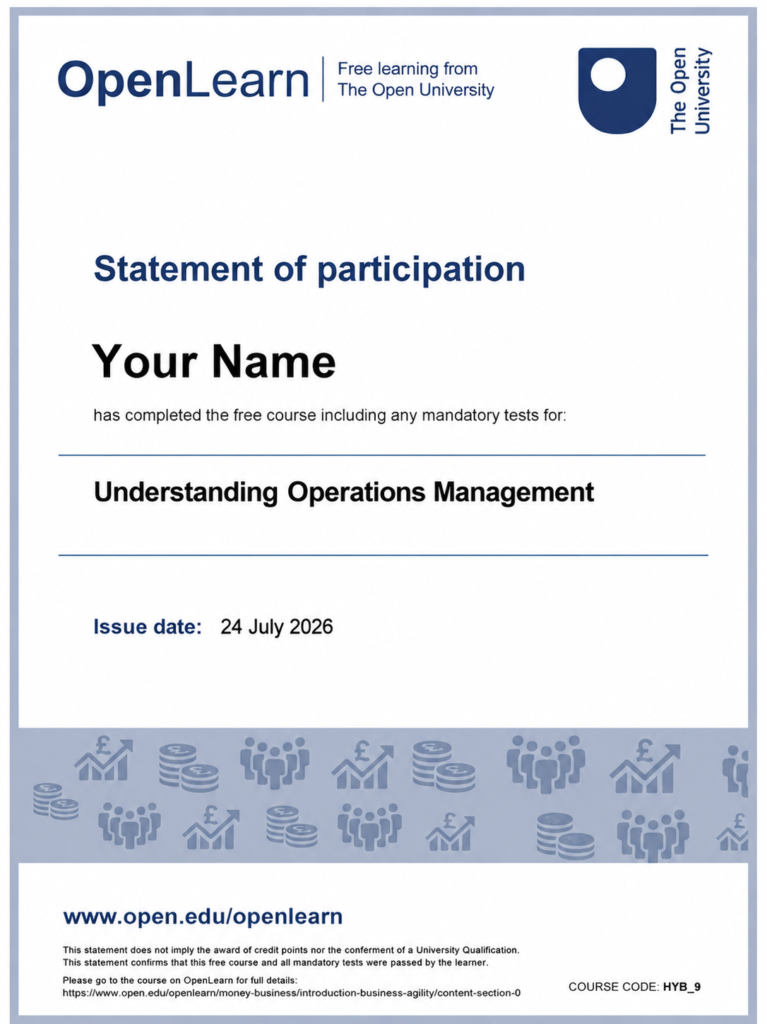
Also from OpenLearn, this course takes a closer look at operations management through a leadership and management lens, exploring how managers make operational decisions in real organizational settings. It complements the more strategy-focused OpenLearn course above by shifting the emphasis toward the people and leadership side of running operations.
If you’re interested in eventually managing teams or processes rather than just understanding the theory, this course adds a practical, leadership-oriented perspective that many introductory courses skip over.
Link: Understanding Operations Management
7. Fundamentals of Operations Management (Alison)
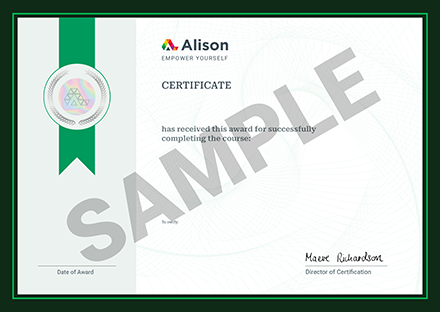
This Alison course offers a structured, certificate-based path through the fundamentals of operations management, covering topics like process design, inventory management, and quality control. Since Alison courses are organized into clear modules with assessments, it’s a good option if you prefer a more formal, checkpoint-based learning structure over freeform video content.
Completing this course also gives you a certificate you can add to your resume or LinkedIn profile, which is useful if you want tangible proof of the skills you’ve built, not just personal familiarity with the subject.
Link: Fundamentals of Operations Management
8. Diploma in Operations Management (Alison)
For learners who want more depth than a single foundational course, this diploma-level program covers operations management topics in far greater detail, including supply chain coordination, process optimization, and operational strategy. It’s a longer commitment, similar in scope to the Diploma in Digital Marketing from our marketing courses list, but it’s worth the extra time if operations is a field you’re seriously considering as a career path.
Because it’s structured as a diploma rather than a short module. It’s better suited to someone who already has some foundational exposure—through one of the shorter courses above. For instance, it is ready to go deeper.
Link: Diploma in Operations Management
9. Supply Chain Management Basics (Alison)
Supply chain management is one of the most practical, in-demand offshoots of operations management, and this course focuses specifically on that area—covering how goods move from suppliers to customers and the decisions companies make along the way to keep that flow efficient. It’s a strong choice if your interest leans toward logistics, procurement, or supply chain roles specifically, rather than operations management in a broader sense.
Given how central supply chain resilience has become to business strategy in recent years, this is one of the more directly relevant courses on the list if you’re considering a career in logistics or supply chain planning.
Link: Supply Chain Management Basics
10. Operations Management Essentials (Great Learning)
This is a more advanced, premium offering from Great Learning, designed for learners who already have some foundational knowledge and want to go further into applied operations concepts. This course is presented as a comprehensive paid course, unlike the rest of the free introductory courses in this list, so it’s worth checking the current pricing on the platform before enrolling.
If you’ve already worked through one or two of the free courses above and want to build on that foundation with more advanced content, this is a reasonable next step, though it does require a greater time and financial commitment than the rest of this list.
Link: Operations Management Essentials
Conclusion
Marketing and finance may receive more emphasis than operations management. Nevertheless, it’s one of the most adaptable skill sets you can acquire, beneficial whether you wind up working in supply chain, manufacturing, retail, or consulting. Whether you’re looking to change careers, are preparing for an MBA, or just want to learn how firms truly operate behind the scenes, these ten courses offer a useful, largely free way to get started.
You May Also Like: CAT MOCK, CAT MOCK PYQ
Follow Us On: Facebook, Instagram