

NTA · National Testing Agency ✦ CUET PG 2027 ✦ MBA Admissions Guide ✦ Updated May 2026
Everything you need to know about the national-level MBA entrance exam — from eligibility and syllabus to cutoffs and top colleges.
Table of Contents
- What Is CUET PG MBA?
- Important Dates for CUET PG 2027
- Eligibility Criteria
- Registration Process
- Exam Pattern & Marking
- Detailed Syllabus
- Preparation Strategy
- Top Colleges & Cutoffs
- Admission Process
- CUET PG vs CAT
- 15 FAQS
What Is CUET PG MBA?
The Common University Entrance Test for Postgraduate admissions (CUET PG) is a national-level entrance exam that the National Testing Agency (NTA) conducts every year. Specifically designed for students who aspire to pursue MBA and other postgraduate management programmes, it has rapidly emerged as one of the most significant gateways to affordable, quality business education in India.
Unlike CAT — which primarily serves IIMs and several private management institutes — CUET PG provides access to multiple participating central, state, deemed, and other universities across India. Furthermore, a single CUET PG score may be used for admission consideration at multiple institutions, although admission procedures and counselling processes vary by university.
The MBA paper under CUET PG carries the code COQP12 and evaluates candidates across four core areas: English Comprehension, Quantitative Ability, Logical Reasoning, and Data Interpretation. Furthermore, with just 75 questions to solve in 90 minutes, the exam strikes a smart balance between depth and speed.
As you plan for CUET PG 2027, this guide walks you through every detail — from registration timelines to preparation tactics — so that your path to a management degree stays as clear as possible.
Important Dates for CUET PG 2027
NTA has not yet released the official notification for CUET PG 2027. Therefore, the timeline below is based on previous admission cycles and should be treated only as an indicative estimate rather than an official schedule. Candidates should regularly check official notifications for confirmed dates.
| Event | Expected Date / Window | Status |
|---|---|---|
| Official Notification | Late December 2026 / Early January 2027 | Awaited |
| Application Form Opens | January 2027 | Awaited |
| Last Date to Apply | Mid-January 2027 | Awaited |
| Correction Window | 3–4 days post-registration close | Awaited |
| Admit Card Release | February 2027 | Awaited |
| CUET PG Exam 2027 | February–March 2027 | Awaited |
| Answer Key Release | March 2027 | Awaited |
| Result Declaration | April 2027 | Awaited |
| University Counselling | April–May 2027 | Awaited |
Key Reference: The CUET PG 2026 exam concluded by March 8, 2026, and results followed in April. Accordingly, the 2027 cycle will mirror this pattern very closely — so mark these months in your calendar now and begin preparation well ahead of time.
Eligibility Criteria
CUET PG eligibility operates at two levels: the NTA’s baseline requirements and the specific criteria that each participating university sets independently. Candidates must satisfy both before they can secure an admission offer.
Basic NTA Criteria
NTA requires a bachelor’s degree in any discipline from a recognized university for CUET PG MBA. In addition, students who appear in the final year of their graduation can also apply on a provisional basis. Importantly, NTA itself imposes no minimum percentage — however, individual universities set their own percentage thresholds during the admission stage, so candidates must review each college’s norms carefully.
Age Limit and Inclusivity
NTA does not set an upper age limit for CUET PG, which makes the exam genuinely open to all. As a result, working professionals who seek a career change and mature candidates who return to education can both apply without restriction. That said, a few universities may impose their own age criteria, so checking their individual prospectus remains advisable.
University-Specific Requirements
Most central universities demand a minimum of 50% aggregate marks in graduation for General category candidates, while SC/ST candidates qualify at 45%. Furthermore, certain institutes specify work experience, domain background, or additional criteria for specialized MBA tracks such as HR, International Business, or Business Analytics. Therefore, reading each university’s admission brochure — not just NTA’s guidelines — is the surest way to avoid surprises.
Quick Tip: Eligibility requirements, including minimum percentage criteria, differ across universities and programmes. Candidates should carefully review the official admission guidelines of their target institutions before applying.
Registration Process
NTA runs the entire CUET PG 2027 application process online through its portal. Moreover, unlike many other exams where college applications happen on separate platforms, CUET PG lets candidates choose their preferred universities and programmes directly within the same registration form — saving significant time and effort.
Step-by-Step Application Flow
Create Your NTA AccountVisit exams.nta.nic.in/CUET-PG and register using a valid email address and mobile number.
Fill the Application FormEnter personal details, academic qualifications, and select COQP12 as your paper for MBA admission.
Choose Your UniversitiesSelect all participating universities and MBA programmes you want to target — all within the same form.
Upload Required DocumentsSubmit a passport-sized photograph, scanned signature, and category certificate if applicable.
Pay the Application FeeGeneral category fee stands at ₹1,400; EWS/OBC-NC pay ₹1,200; SC/ST/PwD pay ₹1,100 (based on the 2026 structure).
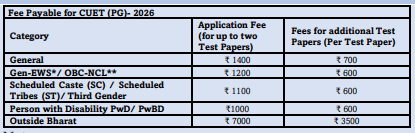
Submit and Download ConfirmationAfter submitting, download the confirmation page and keep it safe — you will need it when the admit card arrives on the same portal.
Correction Window: NTA typically opens a 3–4 day correction window after the registration deadline closes. During this brief period, candidates can edit certain fields — such as category, programme choice, and sometimes exam city preference — so use this opportunity wisely if any details need updating.
Exam Pattern & Marking Scheme
The CUET PG MBA exam (COQP12) runs as a computer-based test (CBT) with 75 multiple-choice questions to answer within 90 minutes. Each correct answer earns 4 marks, bringing the total score to 300. Furthermore, a negative marking system penalizes wrong answers — making careful question selection a key part of test strategy.
75 Total Questions
90 Minutes
+4 Correct Answer
−1 Wrong Answer
300 Maximum Score
| Section | No. of Questions | Marks |
|---|---|---|
| English Comprehension | ~18–20 | ~72–80 |
| Quantitative Ability | ~18–20 | ~72–80 |
| Logical Reasoning | ~18–20 | ~72–80 |
| Data Interpretation | ~15–19 | ~60–76 |
| Total | 75 | 300 |
Time Strategy: With 90 minutes for 75 questions, each question ideally gets 72 seconds. Consequently, skipping difficult questions and returning to them later is strongly advisable — it protects time and keeps accuracy high throughout the paper.
Focus: The exam pattern described reflects recent CUET PG structures. However, NTA may revise the pattern, duration, or distribution of questions through future notifications. Candidates should always verify the latest official exam pattern.
Detailed Syllabus — COQP12
The CUET PG MBA syllabus revolves around four core competency areas. Thorough understanding of each section matters greatly, since the exam evaluates both breadth of knowledge and the speed of application.
1. English Comprehension
This section tests reading speed, grammatical accuracy, and vocabulary range simultaneously. Topics include Reading Comprehension passages, Sentence Correction, Synonyms and Antonyms, Para Jumbles, Fill in the Blanks, Idioms and Phrases, and One-Word Substitutions. Additionally, Verbal Reasoning and Critical Reasoning questions appear regularly — so daily active reading practice proves indispensable for scoring well here.
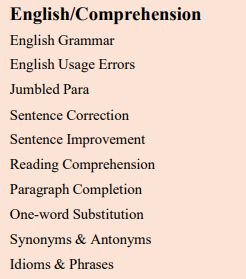
2. Quantitative Ability
This section covers Arithmetic (percentages, profit-loss, ratio-proportion, time-speed-distance), Number Systems, Algebra, Geometry, Mensuration, and basic Statistics. Since no calculator is available during the exam, building strong mental math habits through daily timed practice gives candidates a significant speed advantage. Overall, the difficulty stays moderate — well within reach for most graduates who prepare consistently.
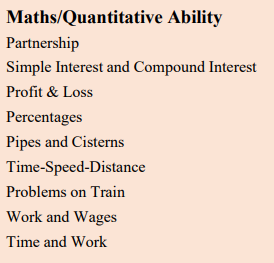
3. Logical Reasoning
This section probes analytical and inferential thinking across a range of puzzle types. Key topics include Seating Arrangements, Blood Relations, Direction Sense, Coding-Decoding, Syllogisms, Critical Reasoning, Input-Output, and Series Completion. Furthermore, Visual Reasoning and Miscellaneous Reasoning puzzles have featured in recent papers, so candidates should practice a wide variety of question formats.
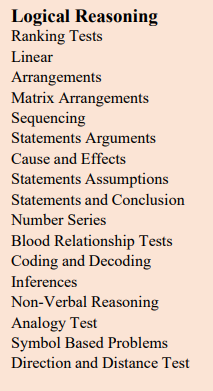
4. Data Interpretation
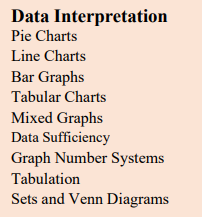
Bar graphs, pie charts, line graphs, tables, and caselets form the primary formats NTA uses in this section. Candidates must read data quickly and derive answers under strict time pressure. Therefore, solving DI sets daily — especially tabular and mixed-format sets — delivers the highest return on preparation time for most aspirants.
Preparation Strategy That Actually Works
CUET PG MBA does not reward last-minute cramming. Instead, it rewards candidates who build systematic, consistent habits over two to three months. Below is a proven, phase-based study plan aligned directly with the COQP12 structure.
| Phase | Duration | Focus Areas |
|---|---|---|
| Foundation | Weeks 1–4 | Complete concept coverage across all four sections; build formula sheets and a vocabulary log |
| Practice | Weeks 5–8 | Daily sectional tests; timed practice sets of 20–25 questions; maintain a detailed error log |
| Mock Tests | Weeks 9–11 | Two full-length mocks per week under exam conditions; analyze every attempt within 24 hours |
| Final Revision | Last 1–2 weeks | High-yield topic revision, attempt strategy refinement, accuracy polish, and light DI practice |

Best Resources for CUET PG MBA
Choosing the right study material accelerates preparation significantly. The resources below offer the best coverage of the COQP12 syllabus at every level.
- CUET PG previous year papers (2022–2026) — the single most critical resource available
- Arun Sharma’s Quantitative Aptitude and Logical Reasoning books for concept building
- Norman Lewis’ “Word Power Made Easy” for systematic vocabulary development
- The Hindu and Business Standard — daily reading builds RC stamina and comprehension speed
- Online platforms like Career Launcher, IMS, and PW for CUET-specific full-length mocks
- NTA’s official portal for sample papers, pattern updates, and syllabus clarifications
Top Colleges & Expected Cutoffs
One of the biggest advantages CUET PG offers is the remarkable range of institutions it covers. Moreover, the exam serves as the primary route to quality MBA education at central universities — making it especially valuable for candidates who want a government-affiliated degree without paying the steep fees that private business schools typically charge.
College-Wise Cutoff Reference
| College / University | Expected Cutoff (out of 300) | Location |
|---|---|---|
| University of Delhi | 230-245 | Delhi |
| Dayalbagh Educational Institute | 160-200 | Agra, UP |
| Dr. Bhimrao Ambedkar University | 140-180 | Agra, UP |
| Banaras Hindu University | 210-230 | Varanasi, UP |
| Babasaheb Bhimrao Ambedkar University | 180-210 | Lucknow, UP |
| Aligarh Muslim University | 200-230 | Aligargh, UP |
| Jamia Millia Islamia | 220-235 | Delhi |
| Devi Ahilya Vishwavidyalaya | 170-210 | Indore, MP |
| Amity University (CUET track) | 150+ | Noida, UP |
| Guru Gobind Singh Indraprastha University | 190-220 | Delhi |
Target Score Guidance: Aiming for 240+ out of 300 keeps TISS and top central universities within reach. A score of 180–220 remains competitive for strong state and deemed universities. Even scoring above 150 unlocks over 100 participating institutions nationwide — so no score in this range goes to waste.
The Admission Process After CUET PG
Clearing CUET PG marks the first milestone — but the admissions journey that follows varies by university. However, most participating institutions follow a broadly consistent multi-step flow, which the section below explains clearly.
How the Post-Exam Process Works
- Appear for the Exam and Collect Scorecard:After NTA declares results in April 2027, download your official CUET PG scorecard from the portal immediately.
- Review Individual University Cutoffs:Each college publishes its own cutoff score, so compare your score against those thresholds before deciding where to apply.
- Apply Directly to Universities:Visit each shortlisted university’s portal and submit a separate application using your CUET PG score as the qualifying credential.
- Attend Counselling Rounds:Participate in merit-based seat allotment, Group Discussions, or Personal Interview rounds — the exact process depends on each institution’s policy.
- Complete Document Verification:Carry original mark sheets, a valid photo ID, your category certificate, and the CUET PG scorecard for physical verification at the university.
- Pay Fees to Confirm the Seat:Once a seat allocation comes through, pay the admission fee within the university’s deadline to lock in your place in the programme.
Do All Universities Hold a GD-PI Round?
Not all universities hold a Group Discussion or Personal Interview round. In fact, many central universities admit students purely on CUET PG merit, skipping additional rounds altogether. However, TISS and a few other premium institutions do conduct supplementary selection stages. Therefore, checking each university’s admission prospectus well in advance helps candidates prepare appropriately for every stage of the process.
Important Reminder: The CUET PG score acts as the primary filter at every institution. Clearing the cutoff is, therefore, a non-negotiable first step — regardless of how the subsequent selection rounds differ from one university to another.
CUET PG vs CAT — Which Should You Choose?
Many MBA aspirants wrestle with the question of whether to prepare for CUET PG, CAT, or both. Fortunately, a side-by-side comparison quickly reveals that the two exams are not mutually exclusive — and in many cases, preparing for both simultaneously proves entirely feasible.
| Parameter | CUET PG MBA | CAT |
|---|---|---|
| Conducting Body | NTA | IIMs (rotating) |
| Duration | 90 minutes | 120 minutes |
| Questions | 75 MCQs | 66 MCQs + TITA |
| Sections | 4 (English, QA, LR, DI) | 3 (VARC, DILR, QA) |
| Difficulty | Moderate | High to Very High |
| Colleges | 190+ (Central, State, Private) | IIMs + ~600 top institutes |
| Fee (Approx.) | ₹1,400 (General) | ₹2,400 (General) |
| Attempts per Year | 1 | 1 |
| Score Validity | 1 year | 1 year |
In summary, CUET PG makes the smarter primary choice for candidates who target central and state university MBA programmes at lower overall cost. CAT, on the other hand, remains essential for IIMs and top private business schools. Consequently, appearing for both within the same admission cycle is a widely recommended strategy — especially since both exams share a broadly overlapping syllabus.
Frequently Asked Questions
1. What is CUET PG 2027?
CUET PG 2027 (Common University Entrance Test – Postgraduate) is a national-level entrance exam conducted by the National Testing Agency (NTA) for admission into postgraduate programs offered by central, state, deemed, and participating universities in India.
2. Who conducts CUET PG 2027?
The exam is expected to be conducted by the National Testing Agency (NTA).
3. When will CUET PG 2027 registration start?
Based on previous trends, registrations are expected to open around December 2026, though official dates are yet to be announced.
4. When is CUET PG 2027 likely to be held?
The exam is expected around March 2027, following previous exam cycles.
5. What is the eligibility for CUET PG 2027?
Candidates generally need a Bachelor’s degree from a recognized institution. Minimum marks and eligibility criteria vary by university and course.
6. Is there an age limit for CUET PG 2027?
Typically, there is no upper age limit, but participating universities may have their own admission criteria. Always verify university-specific rules after notification release.
7. What is the exam mode for CUET PG 2027?
CUET PG is conducted in Computer-Based Test (CBT) mode.
8. How many questions are asked in CUET PG 2027?
The exam is expected to have 75 multiple-choice questions (MCQs).
9. What is the duration of CUET PG 2027?
Candidates are expected to get 90 minutes (1 hour 30 minutes) to complete the exam.
10. What is the marking scheme in CUET PG 2027?
- Correct answer: +4 marks
- Wrong answer: –1 mark
- Unattempted question: 0 marks
for more updates visit the official site of CUET:CUET PG
© 2026 CUET PG 2027 MBA Guide · For informational and educational purposes only.
You may also visit: CATMOCK INDIA|CATMOCK